42% of all embryo transfers in the U.S. now use frozen embryos rather than fresh ones — and for good reason. Frozen embryo transfers often have better success rates than fresh transfers, and they’re significantly cheaper than doing another full retrieval cycle.
But the cost still surprises people. Here’s a complete breakdown of what a FET actually costs and what drives the price.
What Is a Frozen Embryo Transfer?
When you go through an IVF cycle, most clinics freeze any viable embryos you don’t transfer immediately. A frozen embryo transfer (FET) is the process of thawing one of those embryos and placing it into the uterus during a subsequent cycle.
FET cycles require monitoring, hormone preparation, and the transfer procedure itself — but no egg retrieval, no stimulation medications of the same intensity, and less overall medical intervention than a full IVF cycle. That’s why they cost considerably less.
How Much Does a FET Cost?
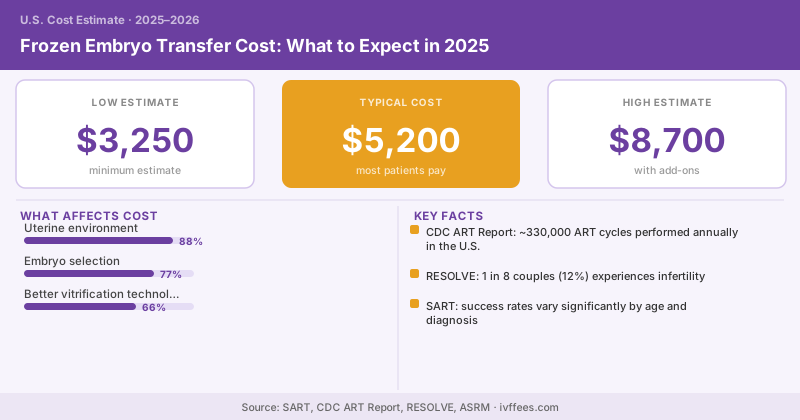
A frozen embryo transfer typically costs $3,000 to $6,500, with most patients paying around $4,000–$5,000 for the procedure and monitoring combined. Medications for a FET protocol add another $200–$800, making the all-in cost $3,500–$7,000.
| FET Cost Component | Low End | Typical | High End |
|---|---|---|---|
| Transfer procedure | $2,200 | $3,200 | $5,000 |
| Monitoring (ultrasounds, bloodwork) | $500 | $800 | $1,500 |
| Medications (estrogen, progesterone) | $150 | $450 | $900 |
| Embryo thawing fee | $200 | $350 | $600 |
| Mock transfer (if required) | $200 | $400 | $700 |
| Total | $3,250 | $5,200 | $8,700 |
Note: Some clinics include the FET in their original IVF package pricing. Always clarify whether your quoted IVF price includes a subsequent frozen transfer or bills it separately.
Natural vs. Medicated FET Protocols
There are two main ways a clinic preps you for a FET, and they carry different medication costs:
Medicated (programmed) FET: You take estrogen to build the uterine lining, then add progesterone before the transfer. Medications cost $150–$600 typically. This protocol is highly controllable and doesn’t depend on your natural ovulation cycle, so it’s easier to schedule precisely.
Natural FET: Your clinic monitors your natural menstrual cycle and times the transfer around ovulation. You may still need a progesterone supplement after transfer. Medication costs are lower ($50–$200), but monitoring costs may be higher because more frequent tracking is needed.
Most clinics default to medicated FETs for simplicity. Your protocol may be influenced by your cycle regularity and your clinic’s preferences.
Progesterone supplementation after transfer often continues for 10–12 weeks into pregnancy. The injectable form (progesterone in oil) is inexpensive — around $30–$80/month. Vaginal progesterone (Endometrin, Crinone) runs $300–$600 per month. Ask your clinic which form they prescribe and factor it into your budget.
Why FET Success Rates Are Often Better Than Fresh Transfers
The CDC ART National Summary Report shows that FET live birth rates have been steadily rising and in many age groups now exceed fresh transfer rates. There are a few reasons for this:
Uterine environment. During a fresh IVF cycle, the high hormone levels from stimulation can make the uterine lining less receptive. A FET gives the body time to return to a more natural state.
Embryo selection. When frozen embryos have been tested via PGT-A (preimplantation genetic testing), you’re transferring only chromosomally normal embryos — substantially improving success odds.
Better vitrification technology. Modern flash-freezing (vitrification) preserves embryos with over 95% survival rates. The embryo you’re transferring has survived the freeze-thaw process, which itself is a form of quality screening.
According to SART data, for women under 35, the live birth rate per FET with non-donor eggs is approximately 52–56%, compared to 45–49% for fresh transfers in the same age group.
When Does Your FET Price Come from a Different Clinic?
If you’re using embryos frozen at one clinic and transferring at another — because you moved, changed providers, or found a clinic with better pricing — you’ll also pay for embryo shipping. This typically costs $300–$600 and requires coordination between both clinics. Not all clinics accept externally-shipped embryos, so confirm this before making plans.
Shipping embryos involves cryogenic courier services and specific paperwork. The process can take 2–4 weeks to arrange. Don’t count on being able to do a transfer cycle the same month you decide to switch clinics.
Does Insurance Cover FET?
It depends on your state and plan. In states with comprehensive fertility mandates (like Massachusetts, New Jersey, Illinois, and New York), employer-sponsored insurance often covers FET cycles — sometimes with a requirement that you’ve already undergone a fresh IVF cycle.
If your fresh IVF cycle was covered but you have leftover frozen embryos, a FET is often the most cost-effective next step and may carry partial insurance coverage even when another retrieval cycle wouldn’t.
Always call your insurance’s fertility case management line to understand what’s covered before scheduling.
Bottom Line on FET Costs
A frozen embryo transfer is usually $3,500–$5,500 all-in — a fraction of what a full IVF retrieval cycle costs. If you have frozen embryos from a prior cycle, FET is almost always your most affordable and often most effective next step.
The key variables that affect your final number: how many monitoring appointments are needed, whether you use a natural or medicated protocol, progesterone form, and whether genetic testing was already done on your embryos. Get a written itemized estimate before your cycle begins.
Data sourced from CDC ART National Summary Report 2021, SART Clinic Summary Report 2022, and ASRM Practice Guidelines 2024.