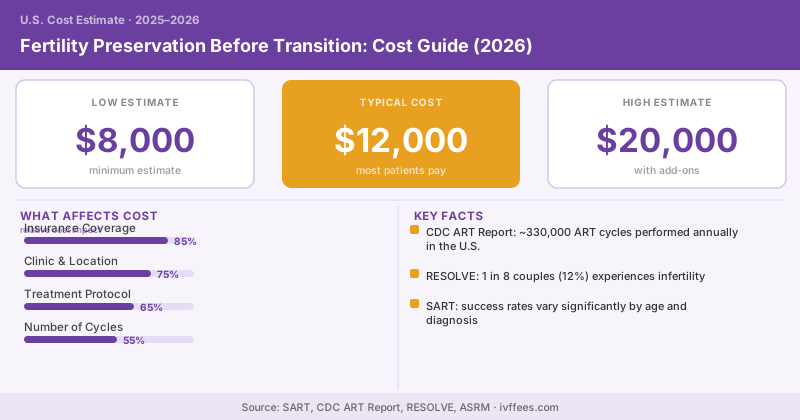
Gender-affirming hormones and surgeries can permanently affect fertility, and many people want the option to have biological children later. If that’s you, preserving eggs, sperm, or embryos before starting hormone therapy or surgery is worth understanding now. Sperm banking can cost as little as $1,000 over a few years; egg or embryo freezing runs $8,000 to $16,000 per cycle. Here’s how to weigh the methods and the money.
ASRM’s ethics guidance has long affirmed that transgender individuals should be offered fertility preservation counseling before gender-affirming treatment. Many clinics now have providers experienced in trans and nonbinary fertility care, so you don’t have to explain the basics from scratch.
Method Depends on Your Body
The right method depends on what reproductive cells you produce, not your gender identity. The two broad routes are sperm banking and egg or embryo freezing.
| Method | Upfront Cost | Annual Storage |
|---|---|---|
| Sperm banking | $500–$1,500 | $150–$500 |
| Egg freezing (per cycle) | $8,000–$16,000 | $500–$1,000 |
| Embryo freezing (per cycle) | $12,000–$20,000 | $500–$1,000 |
Sperm banking is the most affordable and least invasive—a few samples collected and frozen. Egg freezing requires a stimulation-and-retrieval cycle similar to IVF. Embryo freezing means fertilizing eggs (with a partner’s or donor’s sperm) before freezing, which costs more but can yield higher per-unit survival rates. See our deeper guides to egg freezing cost and overall fertility preservation cost.
Timing Matters
Ideally, you preserve before starting gender-affirming hormones, because testosterone and estrogen affect egg and sperm production. Some people pause hormones to do a retrieval cycle, then resume—an option worth discussing with your care team. The earlier you bank, the simpler and often cheaper the process.
If you produce sperm, banking it is the cheapest and easiest preservation route—often under $1,500 upfront plus modest annual storage. If you produce eggs, freezing requires a full retrieval cycle costing $8,000–$16,000. Either way, doing it before starting hormones gives you the most options and usually the lowest cost.
Eggs vs. Embryos
If you have a partner or want to use donor sperm now, freezing embryos rather than eggs can improve later success odds, since embryos survive thaw and implant at higher rates. But it requires deciding on sperm now, and embryos created with a partner have shared legal ownership. Many people freeze eggs to keep options open. Our egg freezing cost guide weighs the tradeoffs.
Insurance coverage for fertility preservation before gender-affirming care is inconsistent and often denied, though a growing number of states and employer plans now cover it. Get any coverage decision in writing before your cycle, and ask the clinic about discounted “fertility preservation” pricing, which some offer below standard IVF rates for medically indicated preservation.
Storage and Future Use
Frozen sperm, eggs, and embryos can be stored for many years. Down the line, using them may involve IUI, IVF, or a gestational carrier depending on your situation and family structure. Storage fees recur annually, so factor those into your long-term budget. For financing the upfront cycle, IVF financing options covers grants and payment plans, some specifically for LGBTQ+ patients.
Frequently Asked Questions
Do I have to pause hormone therapy to preserve fertility? For sperm banking, often no—you may be able to provide samples before starting. For egg retrieval, clinics typically prefer you haven’t started testosterone, or that you pause it, since hormones suppress egg production. Discuss timing with a provider experienced in trans fertility care.
Is sperm banking really that much cheaper than egg freezing? Yes. Banking sperm involves collecting and freezing samples for a few hundred to about $1,500 upfront, plus modest storage. Egg freezing requires a medicated stimulation cycle and surgical retrieval, pushing costs to $8,000–$16,000. The biological process is simply more involved for eggs.
Will I be able to have a biological child later? Frozen sperm, eggs, or embryos can be used years later through IUI, IVF, or with a gestational carrier, depending on your family-building plan. No method guarantees a future birth, but preserving before gender-affirming treatment keeps the biological option open that hormones or surgery might otherwise close.