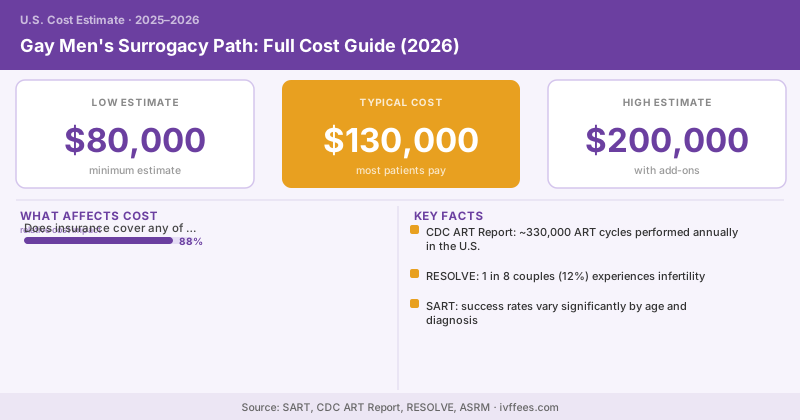
The number that stops most gay men in their tracks is six figures. A complete gestational surrogacy journey in the U.S.—egg donor, IVF, surrogate, agencies, lawyers, and medical care—runs roughly $130,000 to $220,000. It’s the most expensive family-building path there is, and for two men or a single dad, there’s no cheaper biological route. So let’s be precise about what you’re buying.
Family Equality has long reported that LGBTQ+ people are far more likely to grow their families through assisted reproduction and surrogacy than their straight peers. For gay men specifically, gestational surrogacy paired with an egg donor is the standard route to a genetically related child.
The Four Cost Pillars
Your money splits across four major categories. None is optional in a full agency journey.
| Cost Pillar | Typical Range |
|---|---|
| Egg donor (fees + agency) | $20,000–$45,000 |
| IVF & embryo creation | $20,000–$35,000 |
| Surrogate compensation | $45,000–$70,000 |
| Agency, legal & insurance | $40,000–$70,000 |
Egg donation is where many gay men start. You’ll select a donor, cover her compensation and screening, and create embryos via IVF—usually splitting eggs so each partner can fertilize half if you want both to have a genetic shot. Our donor egg IVF cost guide breaks the lab side down further, and the surrogacy cost overview covers the carrier side.
Splitting Embryos Between Partners
A practical wrinkle for couples: deciding whose sperm fertilizes which eggs. Many clinics will split a donor’s retrieved eggs into two batches, fertilizing one with each partner’s sperm. You’ll get two sets of embryos, and you choose which to transfer first. This doesn’t add a huge cost—maybe an extra ICSI charge—but it’s an emotional decision worth discussing early.
Budget $150,000 as a realistic midpoint for an agency-managed gay surrogacy journey, and keep a $20,000–$30,000 contingency for a failed transfer, a second IVF cycle, or pregnancy complications. The biggest cost-cutting lever is going independent (matching with a surrogate without a full-service agency), but that shifts coordination and risk onto you.
Where Costs Swing the Most
State law is the wild card. Surrogacy-friendly states like California, Nevada, and Colorado have clear legal frameworks, but legal fees and surrogate compensation tend to run higher there too. Some states still restrict or ban compensated surrogacy entirely, which forces you to match with a carrier elsewhere and adds travel costs.
Don’t skimp on the legal pillar. Pre-birth orders, parentage establishment, and second-parent adoption (still recommended in many states even when both dads are on the birth certificate) protect your rights. Cutting the lawyer to save $5,000 can cost you legal standing as a parent. This is the one line item you never trim.
Agency vs. Independent
A full-service agency handles matching, escrow, case management, and coordination—convenient, but it’s the priciest route. Going independent (finding your own surrogate, hiring your own attorney and escrow service) can save $20,000–$40,000, but you take on the legwork and the risk of a mismatch. Many first-time dads choose an agency for the safety net. Compare the tradeoffs in our IVF financing options guide, which also covers surrogacy-specific loans.
Frequently Asked Questions
Can both dads be genetically related to the baby? Not to the same baby, but you can split a donor’s eggs and fertilize each batch with a different partner’s sperm. Some couples transfer one embryo from each batch in separate pregnancies, so each dad has a genetically related child. Others let chance decide which embryo implants first.
Why is surrogacy so much more expensive for gay men than IVF for a couple? Because you’re paying for two people you don’t have: an egg provider and a person to carry the pregnancy. A different-sex couple using their own eggs and uterus skips both the donor and surrogate fees, which together make up well over half the total cost.
Does insurance cover any of this? Your own health insurance rarely covers surrogacy. The surrogate needs her own pregnancy coverage, and you’ll often buy a specialized surrogacy insurance policy if hers excludes it. Budget $10,000–$30,000 for insurance and medical contingencies alone.