You’ve been on testosterone for two years, you feel great, and now you and your partner want a baby. Your semen analysis comes back: zero sperm. This scenario plays out constantly — and hCG therapy is often the way out of it.
Human chorionic gonadotropin (hCG) mimics the body’s natural LH, directly telling the testicles to make testosterone and keep producing sperm. It’s a cornerstone of fertility-preserving hormone treatment. Male factor contributes to about 40–50% of infertility cases per the American Urological Association, and TRT-induced suppression is a fast-growing piece of that. Here’s the cost.
What hCG Therapy Costs
hCG is given as a subcutaneous injection, usually 2 to 3 times a week. The medication itself is more expensive than clomiphene, and the cost depends on whether you use a name brand or a compounded version.
| Item | Low | Typical | High |
|---|---|---|---|
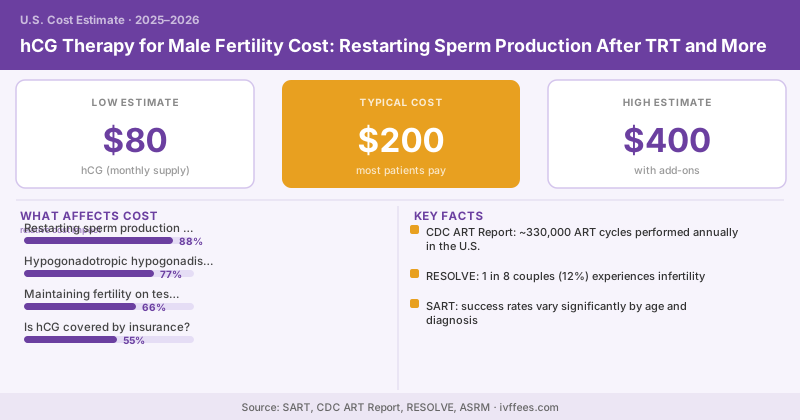
| hCG (monthly supply) | $80 | $200 | $400 |
| Compounded hCG (monthly) | $60 | $150 | $300 |
| Reproductive urologist visit | $150 | $300 | $600 |
| Baseline + monitoring hormone labs | $100 | $250 | $600 |
| hMG/FSH add-on (severe cases, monthly) | $500 | $1,500 | $4,000 |
hCG therapy for male fertility costs roughly $100–$400 a month and is the go-to for restarting sperm production after testosterone replacement or treating low gonadotropins. Recovery can take 3–12 months. It’s far cheaper than IVF, but more expensive than clomiphene, and is often combined with it.
What hCG Treats
Restarting sperm production after TRT. This is the headline use. Exogenous testosterone suppresses the brain’s signal to the testicles; hCG bypasses that by acting like LH directly. A recovery protocol — often hCG plus clomiphene, sometimes with added FSH — can bring sperm back over several months.
Hypogonadotropic hypogonadism. When the brain isn’t producing enough LH and FSH on its own, hCG (sometimes paired with hMG/FSH) jump-starts both testosterone and sperm production.
Maintaining fertility on testosterone. Some men on TRT add low-dose hCG to keep their testicles functioning and preserve future fertility, though this is best managed by a specialist.
A male hormone panel determines whether your pattern fits any of these — hCG won’t help men with primary testicular failure.
hCG vs Clomiphene
Both raise testosterone while protecting fertility, but they work differently. Clomiphene is an oral pill that boosts your brain’s signal; hCG is an injection that acts directly on the testicles. Clomiphene is cheaper and easier (a pill versus needles). hCG is often the better choice when the brain’s signaling is shut down — like after long-term TRT — because it doesn’t rely on the brain responding. Many protocols use both together.
Don’t stop testosterone cold-turkey and expect sperm to return on their own. A structured recovery protocol with hCG (and often clomiphene and FSH) under a reproductive urologist gives the best odds. Recovery can take a year or more, and a small percentage of long-term TRT users never fully recover — start the conversation before you stop trying to conceive.
The Recovery Timeline and Cost
Plan on a 3- to 12-month course. Sperm production runs on a ~72-day cycle, so you won’t see semen analysis changes for months. Add up six months of hCG plus monitoring and you’re often in the $1,500–$4,000 range — still a fraction of a single IVF cycle. If hCG restores enough sperm for natural conception or IUI, the savings are substantial. If it doesn’t, the improved counts can still make IVF with ICSI more likely to succeed.
Frequently Asked Questions
How quickly will hCG bring my sperm back after TRT? It varies widely. Some men see sperm return within 3–6 months; others take a year or more, especially after long-term or high-dose testosterone use. Your urologist will track progress with periodic hormone labs and semen analyses rather than guessing.
Is hCG covered by insurance? Coverage is inconsistent because it’s often prescribed off-label for male fertility. Compounded hCG from a specialty pharmacy can be more affordable when insurance won’t cover the brand. Ask your prescriber and pharmacy about cash pricing.
Can I just use hCG instead of seeing a specialist? No — hCG dosing, the decision to add clomiphene or FSH, and monitoring all require a reproductive urologist or endocrinologist. Self-dosing risks ineffective treatment or side effects, and online “research chemical” hCG is unregulated and potentially unsafe.