$14,000. That’s roughly the typical base fee at Pittsburgh’s most established fertility program — a figure that’s landed the city firmly in the “reasonably affordable” tier for a metro with genuinely strong academic medical infrastructure behind it.
What IVF Costs in Pittsburgh
| Cost Component | Low End | Typical | High End |
|---|---|---|---|
| Base IVF procedure fee | $11,200 | $14,000 | $16,800 |
| Fertility medications | $2,900 | $4,400 | $6,300 |
| Monitoring & labs | $850 | $1,350 | $2,100 |
| Anesthesia | $500 | $800 | $1,250 |
| PGT-A genetic testing (optional) | $3,000 | $4,600 | $6,900 |
| Frozen embryo transfer (if needed) | $2,700 | $4,100 | $5,900 |
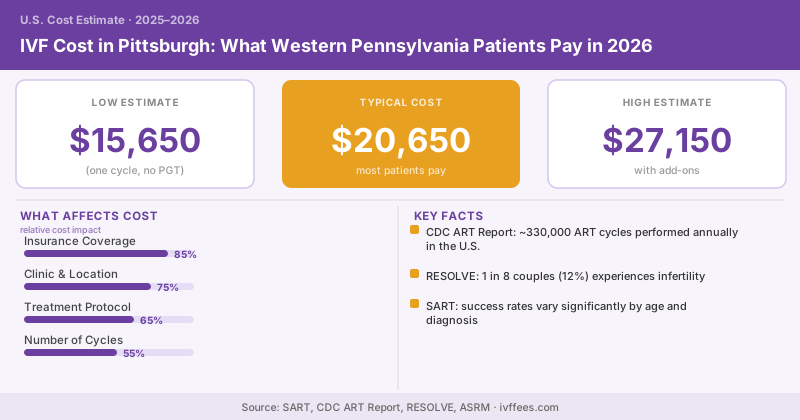
| Total (one cycle, no PGT) | $15,650 | $20,650 | $27,150 |
Pittsburgh pricing runs close to the national average, similar to other Rust Belt and Appalachian regional hubs like Cincinnati and Columbus.
No State Mandate, but a Strong Healthcare-Employer Base
Pennsylvania does not require insurers to cover IVF, so most Pittsburgh-area patients pay out of pocket unless their employer offers voluntary coverage. Pittsburgh’s economy has transformed over recent decades from a steel-industry base into a hub for healthcare, education, and technology — UPMC itself is the region’s largest employer, alongside the University of Pittsburgh, Carnegie Mellon, and a growing number of tech companies with local offices. Large healthcare and university employers in the region are somewhat more likely than average to offer fertility benefits, given competitive hiring pressure in those sectors.
As one of the largest healthcare employers in the country, UPMC has periodically adjusted its employee benefits packages, including fertility-related coverage for eligible staff. If you work for UPMC or an affiliated practice, check your specific plan documents directly with HR rather than assuming standard external insurance rules apply to your coverage.
Pittsburgh-Area Fertility Clinics
- Magee-Womens Hospital of UPMC — one of the largest dedicated women’s hospitals in the U.S., with a long-established, high-volume fertility program
- West Penn Hospital Fertility Center — Allegheny Health Network’s fertility program, an alternative to the UPMC system
- Pittsburgh Fertility Center — independent regional practice
Magee-Womens Hospital’s scale and research infrastructure make it a common first stop for Pittsburgh-area patients, though Allegheny Health Network’s West Penn program provides a genuine alternative for patients wanting to compare across the region’s two largest health systems.
Why Pittsburgh Draws Regional Patients
Pittsburgh serves as a fertility care hub for western Pennsylvania, eastern Ohio, and northern West Virginia, drawing patients from smaller communities without local fertility specialists. The city’s relatively affordable cost of living compared to Philadelphia or New York also makes extended stays for retrieval and transfer more manageable for out-of-town patients.
Reducing IVF Costs in Pittsburgh
Comparing UPMC’s Magee-Womens program against Allegheny Health Network’s West Penn Fertility Center is a natural starting point for local price and outcome comparison. Beyond that, standard national strategies apply: shop specialty pharmacies for medications, check IVF grants, and request itemized quotes covering a full cycle before comparing across providers.
Don’t assume Magee-Womens Hospital’s scale and reputation automatically mean it’s the right or most affordable choice for your specific situation. Compare its SART-reported outcomes for your age group directly against Allegheny Health Network’s program and any independent practices you’re considering — bigger isn’t always a better fit for every patient.
The Bottom Line
Pittsburgh IVF runs roughly $15,650–$27,150 all-in for most uninsured patients, near the national average, anchored by Magee-Womens Hospital’s large academic program and a genuine second option through Allegheny Health Network. Check UPMC employee benefits directly if applicable, and compare both major health systems before choosing a clinic.