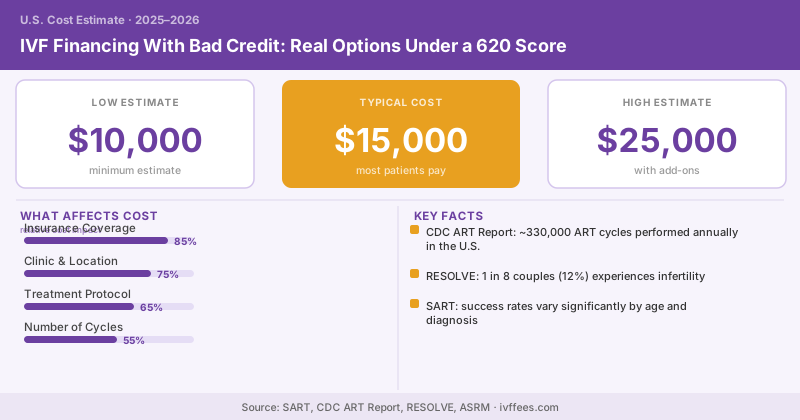
Got turned down for a fertility loan because of your credit? It feels like a dead end. It isn’t. A 580 score doesn’t mean you can’t fund a $15,000–$20,000 IVF cycle — it means you need a different door. Co-signers, secured loans, clinic payment plans, and grants don’t all hinge on a pristine FICO.
Here’s a realistic map for financing IVF when your credit is working against you.
Why credit trips up IVF financing
Most fertility lenders price loans on your score. Strong credit (720+) gets single-digit rates; a sub-620 score gets denied or offered punishing rates above 25%. Since one cycle costs as much as a used car, lenders treat it like a major loan. With fewer than a quarter of large employers covering IVF per Mercer’s 2024 survey, plenty of patients face this exact wall.
The good news: several paths sidestep your credit score entirely.
| Option | Credit needed | Typical cost/rate |
|---|---|---|
| Co-signer loan | Co-signer’s good credit | 7%–15% |
| Secured loan (collateral) | Low/flexible | 8%–14% |
| Clinic in-house payment plan | Often flexible | 0%–12% |
| 401(k) loan | None (your own money) | Prime + ~1% |
| Grant (no loan) | None | $0 (free award) |
Paths that don’t depend on your credit
Get a co-signer. A parent, sibling, or partner with strong credit can co-sign, unlocking far better rates. They’re on the hook if you don’t pay, so it’s a real ask — but it’s the most common workaround.
Secured loans. Borrowing against a car, savings, or home (a HELOC) ties the loan to collateral, which lenders weigh more than your score. Rates are lower because their risk is lower.
Clinic payment plans. Many clinics offer in-house installment plans with looser credit checks than banks. Ask the financial counselor directly — these aren’t always advertised.
401(k) loan. You borrow from your own retirement savings; there’s no credit check because it’s your money. Repay yourself with interest. Weigh this carefully against retirement goals.
Avoid payday loans, “no credit check” lenders charging 100%+ APR, and any service demanding an upfront fee to “find you financing.” These predatory products can trap you in debt far worse than the IVF bill itself. If a deal sounds too easy and the rate is hidden, walk away.
Reduce the amount you need to borrow
The smartest play with bad credit is borrowing less in the first place. Grants don’t check credit at all — a fertility grant is free money. Stack it with the savings tactics in how to reduce IVF cost, and explore whether your insurance covers any of it. Every dollar you don’t finance is a dollar your credit score can’t block.
Bad credit doesn’t end IVF. Co-signers, secured/collateral loans, clinic in-house plans, and 401(k) loans can fund a cycle without a top FICO score — and grants need no credit at all. Borrow as little as possible by stacking grants and discounts first, and steer clear of predatory no-credit-check lenders.
Build credit while you save
If your timeline allows even six months, small moves can lift your score into better loan territory: pay down card balances below 30% utilization, dispute any errors on your report, and never miss a payment. A jump from 600 to 660 can be the difference between a 25% and a 14% rate.
For a side-by-side of all the routes, see our broader financing options guide and our comparison of personal loans for fertility.
Frequently Asked Questions
Can I get an IVF loan with a 580 credit score? Direct fertility-loan approval is unlikely at 580, and any offer would carry a very high rate. Better routes: add a co-signer with good credit, use a secured loan, ask about clinic in-house plans, or borrow from a 401(k). Each sidesteps the score problem.
Is a 401(k) loan a good way to pay for IVF? It has no credit check and a low rate, but you’re borrowing from your retirement and must repay on schedule (often faster if you leave the job). It can work for disciplined borrowers, but weigh the long-term cost to your retirement before tapping it.
Do grants check my credit? No. Fertility grants are awarded based on medical need, financial need, and your application — not your credit score. They’re the single best option when bad credit blocks loans, because they reduce or eliminate the amount you need to borrow at all.