Swipe a credit card for a $20,000 IVF cycle at 24% APR and drag the balance out three years, and you’ll hand the card company roughly $4,800 in interest. Run that same $20,000 through a 9% fertility loan over three years? About $2,900. That $1,900 gap is real money — enough to cover a chunk of your medications.
So which one wins? It depends on three things: your credit score, how fast you can repay, and whether you can snag a 0% promo. Let’s break it down.
The two ways people charge IVF
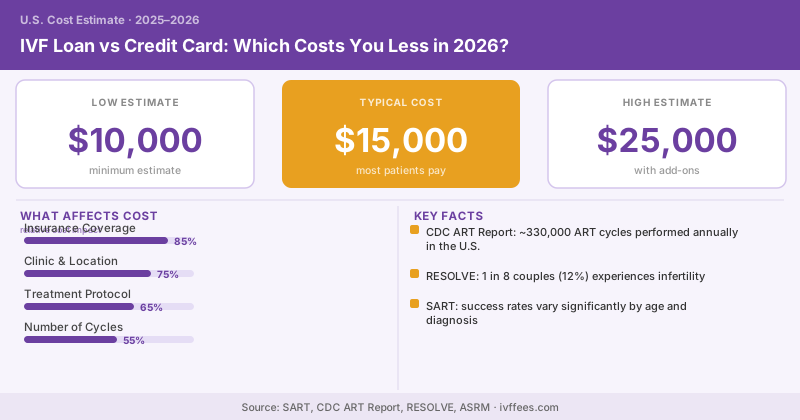
Most patients pay out of pocket. RESOLVE: The National Infertility Association notes that one IVF cycle commonly runs $15,000–$20,000 before medications, and only about a quarter of large U.S. employers offered IVF coverage as of Mercer’s 2024 benefits survey. When insurance won’t cover IVF, people reach for plastic or a personal loan.
A credit card is fast and flexible — but the average card APR sat above 21% in 2024 per Federal Reserve data, and fertility-related cards like CareCredit can hit 26.99% after any promo period ends. A fertility loan (through lenders like Future Family, Lightstream, or your clinic’s financing partner) is a fixed-rate installment loan, usually 6%–18% depending on credit.
| Option | Typical APR | Interest on $20K over 3 yrs | Best for |
|---|---|---|---|
| Credit card (standard) | 21%–27% | $4,200–$6,000 | Nobody, long-term |
| 0% promo card (12–18 mo) | 0% then 25% | $0 if paid in promo | Fast repayers |
| Fertility/personal loan | 6%–18% | $1,900–$5,800 | Most borrowers |
| Home equity (HELOC) | 8%–10% | $2,600–$3,300 | Homeowners w/ equity |
When a credit card actually makes sense
A 0% intro APR card is the one scenario where plastic beats a loan — if you’re disciplined. Some cards offer 0% for 15–18 months. Charge $18,000, pay $1,000/month, and you clear it interest-free before the rate jumps. Miss that window and the back-interest stings.
Cards also win for small, in-between costs: a $400 trigger shot, a co-pay, monitoring bloodwork. Financing those through a formal loan isn’t worth the paperwork.
Deferred-interest cards (common in medical financing) are dangerous. If you don’t pay the FULL balance by the promo deadline, you get charged interest retroactively from day one — not just on the remaining balance. One missed payoff can add thousands.
When a fertility loan wins
For the full cycle cost — and especially if you’ll need 12+ months to repay — a fixed-rate loan almost always costs less. You get one predictable payment, a clear payoff date, and no risk of a rate spike. Many fertility lenders also let you borrow for medications and travel, not just the procedure.
If your credit’s strong (720+), you might land 7%–9%. That’s less than half a typical card rate. Pair a loan with strategies from our guide on how to reduce IVF cost, and your total spend drops further.
For a full IVF cycle you’ll repay over more than a year, a fixed-rate fertility loan almost always beats a credit card — often saving $1,500–$3,000 in interest. Only use a card if you can clear a true 0% promo before it expires.
A quick decision framework
Ask yourself: Can I repay in under 18 months AND qualify for a 0% card? If yes, the card can be free money. If no — or if your credit only qualifies you for a 22%+ card — get a loan. And if you own a home with equity, a HELOC at 8%–10% may undercut both.
Don’t forget to explore non-debt options first. A refund or shared-risk program or a fertility grant can shrink the amount you finance at all. Compare every financing option before signing.
Frequently Asked Questions
Does applying for a fertility loan hurt my credit score? A formal application triggers a hard inquiry, which can ding your score a few points temporarily. But most lenders let you pre-qualify with a soft pull first, so you can see your rate without any impact. Always pre-qualify before formally applying.
Can I pay for IVF medications with the same loan? Often, yes. Fertility-specific lenders typically let you borrow for the full treatment journey — procedure, meds, monitoring, even travel. A general credit card works for meds too, but you’ll pay the higher card APR on every dollar.
What credit score do I need for a good IVF loan rate? A score of 720 or higher usually unlocks the lowest tiers (around 7%–9%). Scores in the mid-600s can still qualify but expect 15%–18%. Below 620, you may need a co-signer or should look at bad-credit financing options.