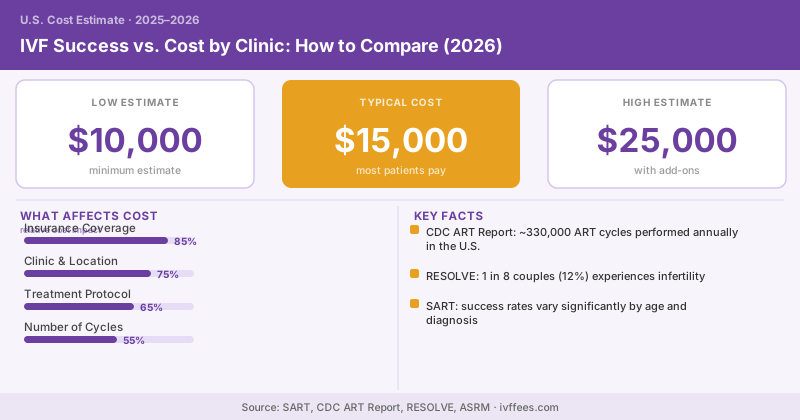
The clinic with the lowest price isn’t always the cheapest. A $13,000 cycle with a 30% success rate can cost you more per baby than an $18,000 cycle with a 50% rate—because you’ll likely need fewer cycles at the better clinic. Comparing IVF clinics on sticker price alone is one of the most expensive mistakes patients make. This guide shows you how to weigh success rates against cost to find genuine value.
SART and the CDC require fertility clinics to report their success rates publicly, and those reports are free to access. That transparency is your single most powerful tool for comparing clinics on what actually matters: live births per cycle.
Cost Per Baby Beats Cost Per Cycle
The metric that matters isn’t the cycle price—it’s the expected cost to take home a baby. A higher-priced clinic with strong success rates can produce a child in fewer cycles, lowering your true total cost.
| Clinic Profile | Cycle Price | Success/Cycle | Est. Cost Per Baby |
|---|---|---|---|
| Budget clinic | $13,000 | 30% | ~$43,000 |
| Mid-tier clinic | $16,000 | 42% | ~$38,000 |
| High-performing clinic | $19,000 | 52% | ~$37,000 |
These illustrative numbers show how a higher cycle price can still mean a lower cost per baby. Our IVF cost guide explains cycle pricing, and IVF success rates by age shows how odds shift across age brackets you should read alongside any clinic’s numbers.
Reading Success Rates Correctly
Raw success rates can mislead. Some clinics post higher numbers by being selective about which patients they treat—turning away difficult cases. Others serve harder cases and report lower averages despite excellent care. Always look at success rates for patients in your specific age band and diagnosis, not the clinic’s overall headline figure.
Compare clinics on estimated cost per baby in your age group, not on cycle price. Pull each clinic’s SART or CDC report, find the live birth rate for your age bracket, and divide your expected total cost by that rate. A pricier clinic with strong age-specific outcomes often delivers a baby for less total money than a cheap clinic with weak results.
Watch for Patient-Selection Games
A clinic boasting sky-high success rates may achieve them by declining poor-prognosis patients or capping the number of embryos transferred. Neither is wrong, but it affects whether their numbers apply to you. Ask directly: “What’s your live birth rate for patients with my age and diagnosis?” Honest clinics answer plainly.
Don’t let a refund or “shared risk” program substitute for checking success rates. These programs price in the clinic’s odds—a clinic with lower success rates charges more for the same guarantee. Verify the underlying live birth rate before assuming a money-back program is a good deal. The program’s price often reveals what the clinic really expects its success rate to be.
Putting It Together
Get itemized quotes (including monitoring, meds, and PGT), pull SART/CDC reports for each clinic, and focus on your age-specific live birth rate. Then estimate cost per baby. The clinic that wins on that metric—not the lowest sticker—is your best value. For paying once you’ve chosen, IVF financing options covers loans, refund programs, and multi-cycle bundles.
Frequently Asked Questions
Where can I find a clinic’s real success rates? SART (the Society for Assisted Reproductive Technology) and the CDC both publish clinic-level IVF success rates online for free. Look up each clinic by name and focus on the live birth rate for your age group and diagnosis, not the overall headline number, which can be skewed by patient mix.
Why can a more expensive clinic be cheaper overall? Because a higher success rate per cycle means you likely need fewer cycles to have a baby. If a pricier clinic gets you pregnant in one or two cycles while a cheaper one takes three or four, the expensive clinic wins on total cost per live birth despite the higher per-cycle price.
Are high success rates ever misleading? Yes. Some clinics post strong numbers by treating mostly easy cases or declining difficult ones, which inflates their averages. Always ask for the success rate specific to your age and diagnosis, and be skeptical of headline figures that don’t reflect patients in your situation.