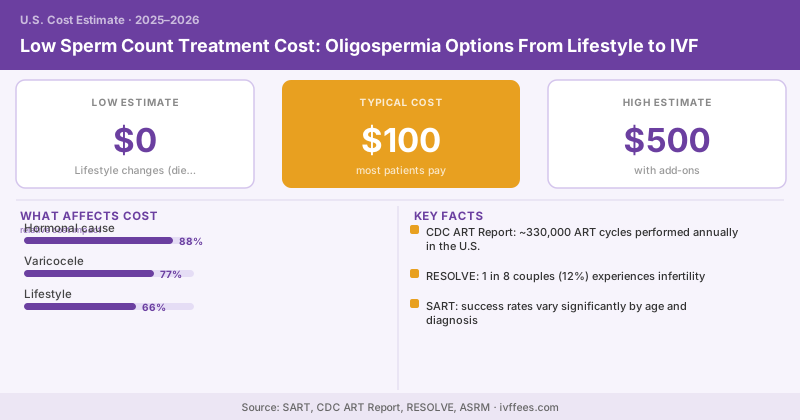
Your semen analysis came back with a concentration of 8 million per milliliter. The reference floor is 16 million. So now what — and what’s it going to cost?
Low sperm count, or oligospermia, is one of the most common findings in male infertility, and male factor contributes to about 40–50% of infertility cases per the American Urological Association. The good news: treatment costs scale with severity, and a lot of cases respond to the cheapest interventions. Here’s the full ladder.
Treatment Costs by Severity
The right treatment depends on how low your count is and why. Mild oligospermia might just need lifestyle fixes. Severe cases jump straight to assisted reproduction.
| Approach | Low | Typical | High |
|---|---|---|---|
| Lifestyle changes (diet, weight, stop heat/smoking) | $0 | $100 | $500 |
| Antioxidant/fertility supplements | $20 | $50 | $120/mo |
| Clomiphene or hCG therapy (if hormonal) | $30 | $100 | $300/mo |
| Varicocele repair (if present) | $4,000 | $8,000 | $15,000 |
| IUI cycle | $300 | $1,000 | $4,000 |
| IVF with ICSI | $15,000 | $20,000 | $30,000 |
Low sperm count treatment ranges from free lifestyle changes to $20,000+ IVF. The key is identifying the cause first — a hormonal issue, a varicocele, or no clear reason. Treating the cause is almost always cheaper than jumping straight to IVF.
Start With the Cause, Not the Treatment
Here’s the mistake couples make: they hear “low count” and assume IVF. But a chunk of oligospermia cases have a fixable cause. A full male fertility workup — including a hormone panel — tells you which lane you’re in.
Hormonal cause. Low testosterone with low FSH/LH points to a problem the brain can fix with medication. Clomiphene or hCG can restart sperm production for $30–$300 a month. Far cheaper than IVF.
Varicocele. Enlarged scrotal veins are present in up to 40% of infertile men. Repairing a varicocele can improve count and motility for many men, and at $4,000–$15,000 it’s a one-time cost rather than ongoing IVF cycles.
Lifestyle. Smoking, heat exposure, obesity, anabolic steroids, and certain medications all suppress production. Some of these reverse in one full sperm cycle (about 72 days) at essentially no cost.
When Assisted Reproduction Makes Sense
If your count is severely low or the cause isn’t fixable, you move to assisted reproduction. With mild oligospermia, IUI — where washed, concentrated sperm is placed directly in the uterus — can be enough at $300–$4,000 per cycle. For severe oligospermia, IVF with ICSI is the answer, since a single sperm gets injected into each egg and you need very few viable sperm.
Never take testosterone to “boost” fertility. Exogenous testosterone shuts down your body’s own sperm production and can cause temporary or permanent infertility. If your count is low and you’re on testosterone, that may be the cause — talk to a reproductive urologist before doing anything else.
The Cost-Smart Sequence
For most men with low count and an otherwise healthy female partner, the financially smart sequence is: fix lifestyle factors, treat any hormonal or varicocele issue, retest after one sperm cycle, then escalate to IUI or IVF only if needed. Jumping straight to IVF when a $100/month medication might have worked is a common and expensive error.
Frequently Asked Questions
How long before I know if cheaper treatments worked? Sperm production takes about 72 days, so any treatment — lifestyle, supplements, or medication — needs roughly 3 months before a repeat semen analysis shows real change. Don’t retest at 4 weeks and conclude it failed.
Does insurance cover low sperm count treatment? Diagnostic testing and treating an underlying medical cause (like a hormonal disorder) are more likely to be covered than IUI or IVF. Coverage for assisted reproduction depends heavily on your state and employer plan. Always verify before scheduling.
Can supplements really raise sperm count? Antioxidant supplements show modest benefit in some studies, particularly for men with high oxidative stress, but they’re not a guaranteed fix. They’re cheap enough to try alongside lifestyle changes, but don’t rely on them if your count is severely low.