In 2010, a man with low testosterone and fertility goals had limited options. Today, reproductive urologists routinely restore both testosterone and sperm production with medications that cost less than a phone bill — and that don’t shut down your fertility the way standard testosterone replacement does.
That distinction is the whole point of this guide. Male factor contributes to roughly 40–50% of infertility per the American Urological Association, and low testosterone is a treatable slice of it. But how you treat it matters enormously for your sperm.
Why Standard TRT Is the Wrong Move
Here’s the trap. A man feels tired, gets tested, has low testosterone, and his doctor prescribes testosterone replacement therapy (TRT) — gels, injections, or pellets. The symptoms improve. But exogenous testosterone signals the brain to stop producing FSH and LH, which are the hormones that drive sperm production. Result: sperm counts crash, sometimes to zero.
If you want kids, the goal isn’t just to raise testosterone — it’s to raise it while keeping your testicles working. That requires a different toolkit and a reproductive urologist, not a general TRT clinic.
What Fertility-Preserving Treatment Costs
| Treatment | Low | Typical | High |
|---|---|---|---|
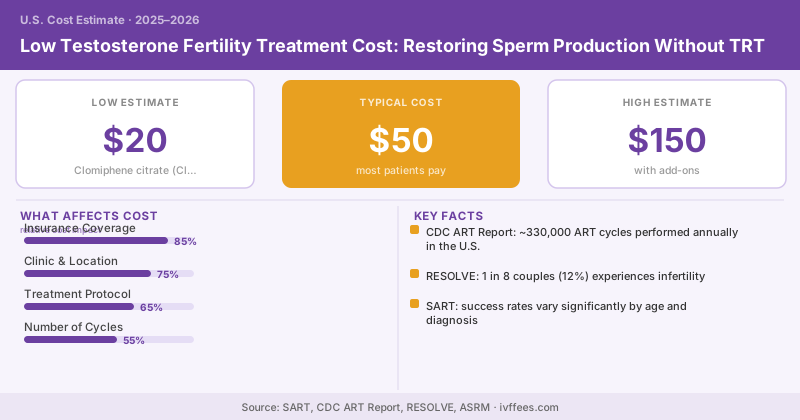
| Clomiphene citrate (Clomid) | $20 | $50 | $150/mo |
| hCG injections | $100 | $200 | $400/mo |
| Anastrozole (aromatase inhibitor) | $20 | $40 | $100/mo |
| hMG/FSH injections (severe cases) | $500 | $1,500 | $4,000/mo |
| Hormone monitoring labs | $100 | $250 | $600/visit |
Fertility-preserving low-T treatment uses clomiphene, hCG, or aromatase inhibitors — typically $30–$300 a month — to raise testosterone while protecting sperm production. Standard testosterone replacement does the opposite and can cause infertility. If you want kids, never start TRT without seeing a reproductive urologist.
How the Medications Work
Clomiphene citrate. An oral pill, originally a female fertility drug, that tricks the brain into making more FSH and LH — which raises your own testosterone and stimulates sperm production. The cheapest and most common starting point at $20–$150 a month.
hCG. Mimics LH, directly stimulating the testicles to produce testosterone and maintain sperm production. Often used alone or alongside clomiphene, especially in men coming off TRT.
Aromatase inhibitors (anastrozole). For men with a high estrogen-to-testosterone ratio, often related to obesity. Lowers estrogen, raises testosterone.
A comprehensive hormone panel — FSH, LH, total and free testosterone, estradiol, prolactin — guides which of these you need. Don’t skip it; the lab work is what separates an effective protocol from guesswork.
If you’re already on testosterone and want to conceive, do not just stop cold. A reproductive urologist can run a recovery protocol with hCG and clomiphene to restart your natural production. Recovery can take 3–12 months, and some long-term TRT users don’t fully recover — get help early.
When Medication Isn’t Enough
Some men have testosterone and sperm counts so low that medication alone won’t get them to natural conception. If a repeat semen analysis after 3–4 months of treatment still shows severe deficits, the path may shift toward IUI or IVF with ICSI. The hormone treatment isn’t wasted, though — it often improves sperm parameters enough to make retrieval and IVF more successful.
The Cost Comparison
Three months of clomiphene plus monitoring might total $500–$1,000. A single IVF cycle runs $15,000–$30,000. For men whose low count traces to a hormonal cause, the medication route can save tens of thousands — and may let you conceive naturally. That’s why a hormone workup belongs at the front of the process, not after a failed IVF.
Frequently Asked Questions
Will clomiphene make me feel better, like TRT does? Many men report improved energy, libido, and mood on clomiphene because it raises their own testosterone. The difference is it does so without shutting down sperm production. Some men have side effects like mood changes or visual symptoms, so monitoring matters.
Does insurance cover these medications? Clomiphene and anastrozole are inexpensive generics often covered or affordable even without coverage. hCG and FSH injections are pricier and coverage varies. Because these drugs may be prescribed “off-label” for male fertility, check your plan and ask the prescriber about cost-saving options.
How soon will my sperm count improve? Sperm production runs on a roughly 72-day cycle, so expect to wait about 3 months before a repeat semen analysis reflects the treatment. Testosterone levels rise faster, but the fertility benefit lags behind.