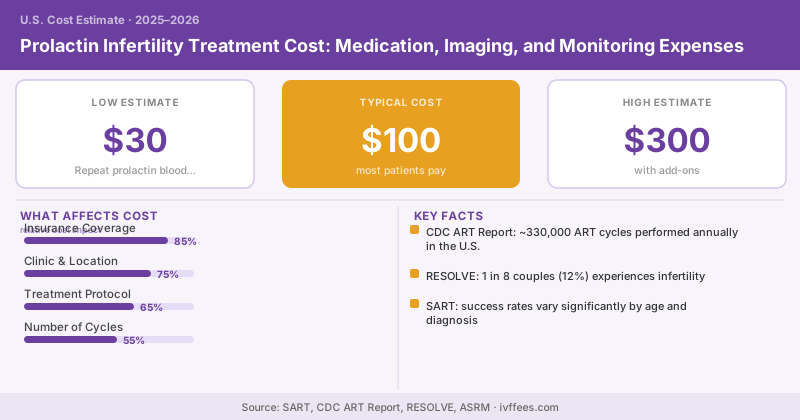
What does it cost to treat infertility caused by high prolactin? Often less than a single month of IVF — and frequently it restores ovulation on its own, no procedures required. High prolactin (hyperprolactinemia) is one of those fertility problems where a relatively inexpensive pill can do what tens of thousands of dollars in treatment otherwise might.
Prolactin is the hormone that drives milk production, and when it’s elevated outside of pregnancy and breastfeeding, it suppresses ovulation. ASRM and ACOG recognize hyperprolactinemia as a treatable cause of ovulatory infertility. Here’s what diagnosis and treatment really run.
Why High Prolactin Blocks Fertility
Elevated prolactin interferes with the hormonal signals that trigger ovulation. The result can be irregular cycles, absent periods, or anovulation — which directly prevents pregnancy. Some women also notice milky nipple discharge (galactorrhea), a classic clue.
The causes range from medications (certain antidepressants, anti-nausea drugs), to hypothyroidism, to a benign pituitary tumor called a prolactinoma. Identifying the cause matters because it changes the treatment and the cost.
| Cost Component | Low | Typical | High |
|---|---|---|---|
| Repeat prolactin blood test | $30 | $100 | $300 |
| TSH + workup for other causes | $50 | $200 | $500 |
| Pituitary MRI (if indicated) | $400 | $1,200 | $3,500 |
| Cabergoline (per month) | $30 | $80 | $200 |
| Bromocriptine (per month) | $15 | $40 | $120 |
| Annual total (typical case) | $300 | $1,000 | $2,500 |
The Workup: Confirm and Find the Cause
Prolactin levels can spike temporarily from stress, exercise, a meal, or even the blood draw itself, so a single high reading is usually repeated under controlled conditions. If it’s truly elevated, the next steps rule out medication causes and hypothyroidism (a treatable, cheap fix on its own), and may include a pituitary MRI to check for a prolactinoma.
The MRI is the priciest single item here, but it’s only ordered when prolactin is significantly elevated or there are concerning symptoms. This testing slots into a standard fertility testing workup when ovulation problems are present.
The Treatment: Dopamine Agonists
The mainstay is a dopamine agonist — cabergoline or bromocriptine — which lowers prolactin and, in most cases, restores ovulation. Cabergoline is usually preferred for being more effective and better tolerated (taken just once or twice a week). These medications are relatively affordable, often $30 to $200 a month, and many women conceive once prolactin normalizes.
That’s the headline: for a great many patients, treating high prolactin means a modest medication cost and a return of natural fertility — no IVF needed.
Hyperprolactinemia is one of the most rewarding fertility diagnoses cost-wise, because treatment is inexpensive and highly effective. Most women resume ovulation on a dopamine agonist and conceive naturally, sidestepping the far higher cost of IUI or IVF entirely. Always rule out medications and thyroid as the cause first — those fixes can be even simpler and cheaper.
When It’s a Prolactinoma
If an MRI reveals a prolactinoma (a benign pituitary tumor), the good news is that most are still treated with the same medications rather than surgery. Dopamine agonists usually shrink the tumor and normalize prolactin. Surgery is reserved for the minority of cases that don’t respond to medication or cause pressure symptoms. So even a tumor diagnosis typically doesn’t mean a huge bill — the medication does the work.
Don’t stop your prolactin medication on your own once you conceive without talking to your doctor. Management of dopamine agonists during pregnancy depends on tumor size and your specific situation, and decisions should be individualized. Stopping or continuing incorrectly can have consequences, so coordinate the plan with your endocrinologist and OB before and during pregnancy.
Where It Fits in Treatment
Because correcting prolactin can restore natural ovulation, it’s addressed early and cheaply before escalating. Many women never need procedures once prolactin is controlled. For those who do require further help — say, a coexisting factor — optimizing prolactin first protects any later investment, including a frozen embryo transfer, by ensuring the hormonal environment supports implantation.
Insurance Coverage
Prolactin testing, dopamine agonists, and even the pituitary MRI are generally covered as standard medical care — not fertility treatment — because hyperprolactinemia is a recognized endocrine condition. That means most plans cover the workup and treatment even when they exclude infertility services. The medications are reasonably priced even without coverage. If treatment doesn’t fully resolve your fertility picture, you can still review IVF financing options for any next steps.
Frequently Asked Questions
Can high prolactin be cured, or do I take medication forever? It depends on the cause. If a medication or thyroid problem is the trigger, fixing that resolves it. For a prolactinoma, treatment may continue long-term, though some tumors shrink enough to eventually reduce or stop medication under specialist guidance.
How long until prolactin treatment restores ovulation? Often within a few weeks to a couple of months as prolactin normalizes. Many women resume regular cycles and ovulation fairly quickly on cabergoline, which is why natural conception frequently follows without further treatment.
Does a pituitary tumor mean I need surgery? Usually not. Most prolactinomas respond well to dopamine agonist medication, which shrinks the tumor and lowers prolactin. Surgery is reserved for cases that don’t respond or cause significant pressure symptoms.
Bottom Line
Prolactin-related infertility treatment is among the most affordable in reproductive medicine — typically $300 to $2,500 a year for testing, medication, and monitoring, and usually insurance-covered as standard endocrine care. A simple dopamine agonist often restores ovulation and natural fertility, sparing the much larger cost of procedures. Confirm the elevated level, rule out medications and thyroid first, and treat the underlying cause before spending on anything more invasive.