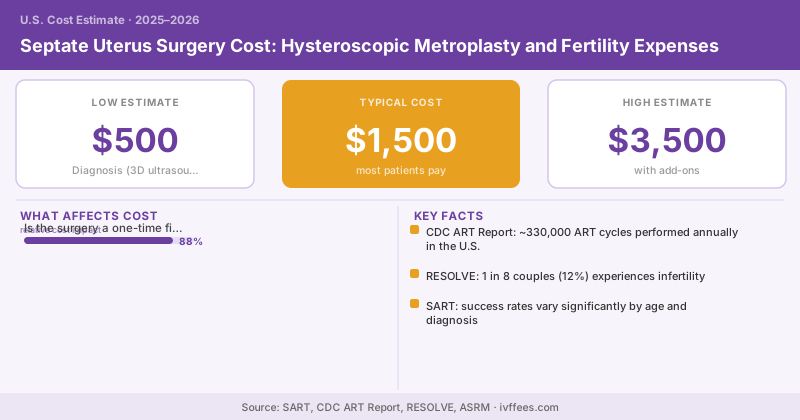
A septate uterus is the most common congenital uterine abnormality, and for many women it’s discovered only after repeated miscarriages. The fix — hysteroscopic metroplasty — costs $4,000 to $12,000 and is one of the more straightforward corrective surgeries in reproductive medicine. The question of whether you need it, though, is more nuanced than the price tag suggests.
ACOG describes uterine septa as the most frequent uterine anomaly, and a septum is associated with higher rates of miscarriage and some pregnancy complications. Here’s what surgery costs and when the evidence supports it.
What a Septate Uterus Is
During fetal development, the uterus forms from two tubes that fuse and the dividing wall normally resorbs. In a septate uterus, that wall (the septum) doesn’t fully reabsorb, leaving a band of tissue dividing the cavity. The septum has poor blood supply, so an embryo implanting on it may not develop well — which is why septa are linked to pregnancy loss more than to difficulty conceiving.
The Surgery: Hysteroscopic Metroplasty
The correction is elegantly simple compared to other uterine surgeries. A hysteroscope goes through the cervix — no abdominal incisions — and the septum is cut or resected from inside, opening the cavity into a normal shape. It’s typically an outpatient procedure with quick recovery.
| Cost Component | Low | Typical | High |
|---|---|---|---|
| Diagnosis (3D ultrasound / MRI / sono-HSG) | $500 | $1,500 | $3,500 |
| Hysteroscopic metroplasty (septum resection) | $4,000 | $7,000 | $12,000 |
| Anesthesia | $500 | $1,200 | $2,500 |
| Facility/OR fees | $1,500 | $4,000 | $8,000 |
| Follow-up imaging | $300 | $700 | $1,500 |
Getting the Diagnosis Right
This matters a lot for cost, because a septate uterus can be confused with a bicornuate uterus on basic imaging — and they’re treated completely differently. A septum is corrected with simple hysteroscopic surgery; a bicornuate uterus generally isn’t operated on the same way. Accurate diagnosis requires 3D ultrasound, MRI, or sonohysterography rather than a flat 2D scan.
Getting this wrong means either an unnecessary surgery or a missed treatable cause, so proper imaging is part of any thorough fertility testing workup when a uterine anomaly is suspected.
Surgery makes the most sense for women with a history of recurrent miscarriage or a septum thought to be contributing to pregnancy loss. For a woman with a septum but no fertility problems and no losses, the evidence for prophylactic surgery is weaker. Don’t assume an incidental finding automatically needs a $7,000 operation — discuss your specific reproductive history with your RE first.
When the Surgery Is Worth It
The strongest case for metroplasty is recurrent pregnancy loss attributed to the septum. Removing the septum gives the embryo a normal cavity with proper blood supply to implant in, and many studies report improved live-birth rates afterward.
For women heading into IVF, correcting a significant septum before frozen embryo transfer protects the investment in those embryos. There’s no point transferring a hard-won embryo into a divided cavity if a simple resection can fix the anatomy first.
A septate uterus and a bicornuate uterus look similar but are fundamentally different and treated differently. Cutting into a bicornuate uterus the way you’d resect a septum can cause harm. Make sure your diagnosis is confirmed with 3D imaging or MRI by a specialist before any surgery — this is the single most important step to avoid a costly, wrong procedure.
Recovery and Trying Again
Recovery from hysteroscopic metroplasty is usually fast — many women resume normal activity within days. Surgeons often recommend waiting one to two cycles before trying to conceive to allow the cavity to heal, sometimes with estrogen to support lining regrowth. A follow-up scan confirms the cavity is now normal.
Insurance Coverage
Hysteroscopic metroplasty is commonly covered under surgical/gynecological benefits because it corrects a structural anomaly and treats recurrent pregnancy loss — a recognized medical condition — even on plans that exclude fertility treatment. The diagnostic imaging is often covered too. Confirm coding with your provider, and if you proceed to IVF afterward, that piece follows your state mandate; IVF financing options can help with the treatment side.
Frequently Asked Questions
Does a septate uterus cause infertility or just miscarriage? Primarily miscarriage. Most women with a septum can conceive; the septum’s poor blood supply makes it more likely that a pregnancy implanting on it will be lost. That’s why surgery targets pregnancy loss more than difficulty conceiving.
How soon after surgery can I try to conceive? Most specialists advise waiting one to two menstrual cycles for the cavity to heal, sometimes with a follow-up scan to confirm a normal shape before trying or transferring an embryo.
Is the surgery a one-time fix? Usually, yes. Unlike scar tissue in Asherman’s syndrome, a resected septum doesn’t typically grow back, so hysteroscopic metroplasty is generally a single corrective procedure.
Bottom Line
Septate uterus surgery costs $4,000 to $12,000 for a relatively quick, outpatient hysteroscopic procedure that can meaningfully cut miscarriage risk. The keys are an accurate 3D-confirmed diagnosis (so it isn’t confused with a bicornuate uterus) and a clear reproductive reason to operate. For women with recurrent loss or those preparing for IVF, correcting a significant septum is often a worthwhile, frequently insurance-covered investment.