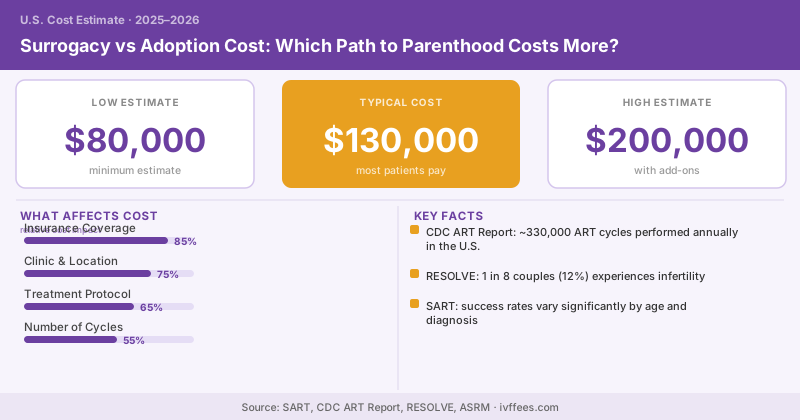
How much does it cost to build a family when biology needs a hand? If you’re weighing surrogacy against adoption, the answer ranges from about $20,000 to over $200,000 — a tenfold spread depending on which path you take and how you take it. Money is rarely the only factor, but it’s often the deciding one.
Here’s an honest comparison of both routes, dollars first.
The Headline Numbers
| Path | Typical Cost Range | Genetic Link? |
|---|---|---|
| Gestational surrogacy (U.S.) | $100,000–$200,000 | Yes (one or both parents) |
| Domestic infant adoption | $20,000–$45,000 | No |
| Foster-to-adopt | $0–$5,000 | No |
| International adoption | $25,000–$50,000 | No |
| Embryo donation/adoption | $5,000–$16,000 | No |
Surrogacy is far and away the most expensive option. Foster-to-adopt is the least, often costing almost nothing because public agencies cover most fees and subsidies may apply. The middle ground — domestic and international adoption — clusters around $20,000 to $50,000.
Why Surrogacy Costs So Much More
A gestational carrier arrangement stacks up costs that adoption simply doesn’t have: carrier compensation, IVF cycles, two sets of attorneys, escrow management, and agency coordination. You’re paying for a medical journey and a legal one simultaneously.
The payoff is a genetic connection. For many intended parents — especially same-sex male couples or women who can produce eggs but can’t carry — surrogacy is the only path to a biologically related child. That biological link is what the six-figure price buys.
Why Adoption Costs Vary So Much
Adoption’s wide range reflects very different routes. Foster-to-adopt is heavily subsidized and can be nearly free, but typically involves older children and a longer matching process. Domestic infant adoption through an agency runs $20,000 to $45,000 and includes agency fees, birth-mother expenses, legal costs, and home studies. International adoption adds travel and foreign processing fees.
Surrogacy costs roughly four to ten times more than most adoptions — $100,000–$200,000 versus $20,000–$50,000 — and far more than foster-to-adopt, which can be nearly free. The premium buys a genetic link and a pregnancy you help guide. If a genetic connection isn’t essential, adoption is dramatically cheaper.
The Timeline Factor
Cost isn’t only money — it’s time, and time has its own price. Surrogacy from match to birth typically takes 15 to 24 months once you’ve found a carrier. Domestic infant adoption wait times vary enormously, from under a year to several years depending on the family’s openness criteria. Foster-to-adopt and international timelines differ again. A longer wait can mean more years of fertility-clinic storage fees, more emotional cost, and shifting finances.
Both paths carry the risk of money spent without a guaranteed child. In adoption, a birth mother can change her mind, and you may lose non-refundable expenses already paid. In surrogacy, failed transfers, miscarriage, or a carrier who can’t continue can drain a budget fast. Build a contingency fund of 10–20% into either path, and confirm exactly which payments are refundable before you make them.
Financing and Assistance
Both paths have help available. The federal Adoption Tax Credit has historically offset a meaningful chunk of qualified adoption expenses — check the current year’s IRS figure, as it adjusts annually. Surrogacy has fewer tax breaks but more lending products and clinic packages. RESOLVE: The National Infertility Association maintains resources on grants and financing for both.
For surrogacy, look into surrogacy financing options and the typical surrogate compensation structure so you know where the money goes. For a genetic-link path that’s cheaper than full surrogacy, embryo adoption sits in between.
How to Choose
Choose surrogacy if a genetic connection is essential and you can finance six figures. Choose adoption if you’re open to a non-genetic child and want to spend far less — with foster-to-adopt being the budget option and domestic infant adoption the middle path. Many families also blend approaches over time.
Frequently Asked Questions
Is surrogacy ever cheaper than adoption? Almost never. Even the lowest-cost U.S. surrogacy generally exceeds the highest-cost private adoption. The only scenarios where surrogacy competes on price are international surrogacy in low-cost countries, which carries its own legal risks.
Does the adoption tax credit make adoption nearly free? It significantly reduces qualified expenses for eligible families, but it’s a credit against tax owed, not a cash refund of every dollar. Check the current IRS limit and your eligibility, since income phaseouts apply.
Can I do IVF first and only consider surrogacy if it fails? Yes, and many people do exactly that. Standard IVF cost is far lower than surrogacy, so it’s common to exhaust IVF and possibly donor options before moving to a gestational carrier or adoption.