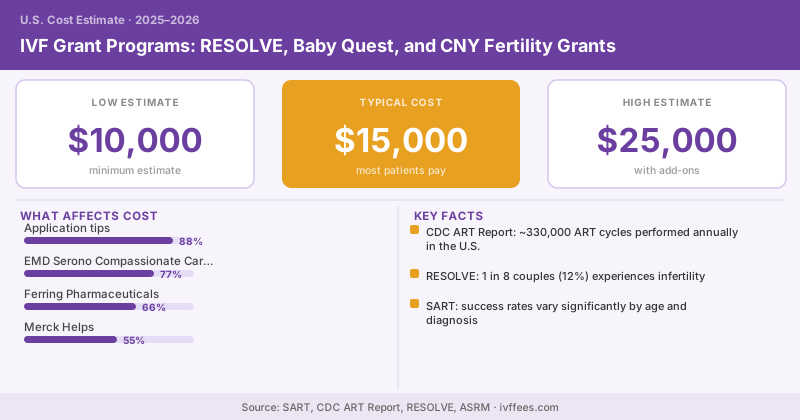
Free money for IVF is real — but the competition is fierce, the deadlines are annual, and most families don’t know these programs exist until it’s too late.
IVF grants don’t cover everything, and not everyone qualifies. But for families who do, they can mean $5,000–$25,000 toward treatment costs that feel impossible to afford. This guide covers the major programs, what they actually award, and how to put together an application that stands out.
Major IVF Grant Programs
| Program | Award Amount | Eligibility | Deadline |
|---|---|---|---|
| Baby Quest Foundation | $2,000–$15,000 | Income and medical need | Biannual (spring/fall) |
| RESOLVE Hope Award | Varies by sponsor | Medical diagnosis required | Annual |
| CNY Fertility Grant | $5,000–$10,000 (toward CNY services) | Open application | Ongoing |
| Tinina Q. Cade Foundation | $10,000 | Financial need, medical documentation | Annual |
| Pay It Forward Fertility | $5,000–$15,000 | Specific criteria vary | Annual |
| International Council on Infertility (INCIID) | $10,000 toward clinic fees | Multiple criteria | Ongoing |
Baby Quest Foundation
Baby Quest is one of the most well-known and widely available grant programs. They award grants twice yearly — typically spring and fall — with amounts ranging from $2,000 to $15,000.
Eligibility considerations include financial need, medical infertility diagnosis, and personal essay. They do not have strict income caps but do prioritize applicants for whom treatment would be financially inaccessible without help.
Baby Quest has awarded over $2.7 million in grants since 2012, according to their published impact data. Applications are open to couples and individuals of all relationship types.
Application tips: The essay component is critical. Baby Quest reviewers consistently say that specific, personal narratives that convey the emotional and financial reality of infertility — not generic language — make the strongest applications.
RESOLVE: The National Infertility Association
RESOLVE is the largest nonprofit advocacy organization for infertility in the United States. They don’t run a direct grant program but coordinate the “Fertility LifeLines” program and partner with pharmaceutical companies to provide medications at reduced or no cost.
According to RESOLVE, their programs have helped over 1 million patients access fertility medications through patient assistance programs. If medications are your biggest cost barrier (which at $3,000–$7,000 per cycle they often are), this may be more immediately helpful than a grant.
RESOLVE also maintains a comprehensive database of state-by-state fertility benefits and insurance mandates at resolve.org.
RESOLVE maintains a searchable grant database at resolve.org/support. The American Fertility Association also maintains a list, as does the Fertility Within Reach nonprofit. Search these databases before applying anywhere — some smaller regional and clinic-specific grants aren’t widely publicized but have less competition.
CNY Fertility Grants
CNY Fertility, based in New York and with multiple locations, runs one of the most straightforward grant programs among fertility clinics. Their grants award $5,000–$10,000 applicable specifically toward CNY services.
CNY’s clinic fees are already significantly below national average (they publish transparent pricing online), which makes a $5,000–$10,000 grant toward CNY services genuinely impactful. The catch: you have to be willing to use CNY specifically, which may require travel if you don’t live near one of their locations.
CNY accepts applications on an ongoing basis rather than annual windows, which means there’s no single annual deadline to miss.
Pharmaceutical Medication Assistance Programs
These aren’t grants in the traditional sense, but they can dramatically reduce one of IVF’s biggest costs:
EMD Serono Compassionate Care: Provides Gonal-F (follitropin alfa) at reduced cost or free for qualifying patients. Income thresholds apply.
Ferring Pharmaceuticals: Offers the HEART program for Bravelle and Menopur — reduced-cost medications for low-income patients.
Merck Helps: Provides Follistim AQ at reduced cost for qualifying patients.
Most of these programs require your RE’s office to submit paperwork on your behalf. Ask your clinic’s financial coordinator — many offices have experience navigating these programs.
Military and Government Employee Benefits
If you or your partner are active military, veterans, or federal employees:
TRICARE: Covers IVF for active duty military when infertility results from a service-connected injury or illness. This is a significant benefit that’s often overlooked.
VA benefits: As of 2017, the VA provides IVF benefits to eligible veterans with service-connected conditions causing infertility.
Federal Employee Health Benefits (FEHB): Many FEHB plans include fertility benefits — check your specific plan, as coverage varies among the 250+ plans available.
Grant applications require significant documentation: tax returns, medical records confirming infertility diagnosis, physician letters, and personal essays. Start gathering these materials 2–3 months before the application deadline. Many rejections happen not because applicants are ineligible but because their applications are incomplete.
State-Specific Grant and Assistance Programs
Several states have fertility assistance programs beyond insurance mandates:
- New York: The Fertility Access Program (run through NYSOP) provides financial assistance for low-income New Yorkers
- Illinois: Some county health departments offer reproductive assistance funds
- California: Several county-based programs exist; the CA Fertility Support program was piloted in recent years
These programs change frequently and are often underfunded. Check your state’s health department website and RESOLVE’s state-by-state map for current availability.
How to Improve Your Grant Application
The families who win fertility grants tend to have these in common:
- Specific, clear financial documentation showing genuine need
- Complete medical history with physician confirmation of diagnosis
- Compelling personal narrative that’s specific, not generic
- Proofread, complete applications submitted before deadlines
- Multiple simultaneous applications to different programs
Most programs receive 3–10x more applications than they can fund. Treat each application like a job application — it deserves real attention and effort.
The Bottom Line
IVF grants are real money that real families receive every year. Baby Quest, INCIID, CNY Fertility, and pharmaceutical assistance programs together represent millions of dollars in annual awards. The key is knowing where to look, starting applications early, and putting genuine effort into the essays. Don’t leave this money on the table.