“We recommend genetic testing your embryos.” Your doctor said it like it was obvious. Then the billing department quoted you $4,000 on top of an already-expensive IVF cycle.
Preimplantation genetic testing (PGT) is genuinely valuable in the right circumstances. It’s also one of the most aggressively oversold add-ons in fertility medicine. Here’s an honest look at the cost, the evidence, and when it makes sense for you.
What Is PGT and What Are the Types?
Preimplantation genetic testing analyzes embryos for chromosomal or genetic abnormalities before transfer, allowing selection of the most chromosomally normal embryo. There are two main types:
PGT-A (Preimplantation Genetic Testing for Aneuploidy): Screens embryos for the correct number of chromosomes (46). Abnormal chromosomal count (aneuploidy) is a leading cause of implantation failure and miscarriage. PGT-A doesn’t screen for specific gene mutations — just chromosomal copy number.
PGT-M (Preimplantation Genetic Testing for Monogenic Disorders): Tests embryos for a specific inherited genetic condition — things like BRCA1/BRCA2, cystic fibrosis, spinal muscular atrophy, Huntington’s disease, or sickle cell disease. Requires custom probe design, making it more expensive and requiring more lead time.
PGT Pricing Breakdown
| PGT Cost Component | Low End | Typical | High End |
|---|---|---|---|
| Embryo biopsy fee (clinic) | $1,000 | $1,500 | $2,500 |
| PGT-A testing (genetics lab) | $1,800 | $3,000 | $4,500 |
| PGT-A total | $2,800 | $4,500 | $7,000 |
| PGT-M custom probe design | $1,500 | $2,500 | $4,000 |
| PGT-M testing per embryo | $300 | $500 | $800 |
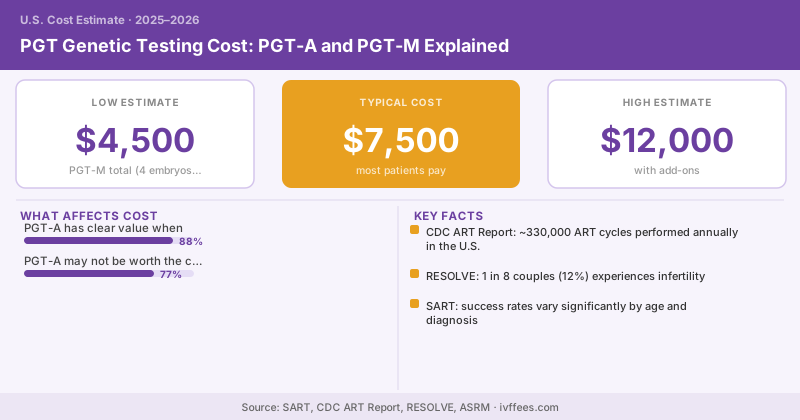
| PGT-M total (4 embryos) | $4,500 | $7,500 | $12,000 |
PGT-A pricing often includes testing for up to 6–8 embryos. Additional embryos typically cost $150–$400 each. The biopsy fee and lab fee may be billed separately — from the clinic and from the genetics lab (LifeView, CooperGenomics, Igenomix, Natera Spectrum, etc.).
When Does PGT-A Make Sense?
The medical community’s view on PGT-A has evolved significantly. A large 2020 trial published in the New England Journal of Medicine found that PGT-A did not improve cumulative live birth rates in women with good prognosis (under 36, first IVF attempt). Yet PGT-A is now performed on roughly 40% of all U.S. IVF cycles, according to SART data.
PGT-A has clear value when:
- You have recurrent implantation failure — two or more failed transfers of morphologically normal embryos
- You’ve had recurrent pregnancy loss — two or more miscarriages, especially if chromosomal causes are suspected
- Advanced maternal age — at 40+, 60–80% of embryos may be aneuploid. PGT-A identifies the normal ones, reducing transfer attempts and miscarriage
- You have a limited number of embryos — knowing which ones are normal helps prioritize
PGT-A may not be worth the cost when:
- You’re under 35 with good prognosis and multiple embryos
- You have religious or ethical concerns about discarding embryos
- You’re at a clinic where counseling about PGT-A limitations is minimal
- You’re already operating on a tight fertility budget
PGT-A sometimes identifies “mosaic” embryos — those with a mix of normal and abnormal cells. Many clinics default to not transferring mosaic embryos, but ASRM guidelines suggest that many mosaic embryos can and do result in healthy pregnancies. Before discarding a mosaic embryo, ask whether transfer under close monitoring is an option at your clinic.
PGT-M: Testing for Specific Inherited Conditions
PGT-M requires custom design of a genetic probe specific to your family’s mutation — before your IVF cycle even begins. This design process takes 4–8 weeks and costs $1,500–$4,000 regardless of whether you proceed with IVF.
Common conditions tested via PGT-M:
- BRCA1/BRCA2 — hereditary breast and ovarian cancer risk
- Cystic fibrosis — both parents are carriers
- Spinal muscular atrophy (SMA)
- Huntington’s disease — one parent is affected or at risk
- Sickle cell disease
- Tay-Sachs disease
- Fragile X syndrome
If you have a known hereditary condition or are both carriers of a recessive disorder, PGT-M is one of the most powerful tools in reproductive medicine — it essentially eliminates the risk of transmitting that specific condition to your child. The cost is significant but often is justified for families facing these diagnoses.
PGT-M doesn’t replace prenatal testing. It dramatically reduces the risk of a specific known mutation, but it doesn’t screen for de novo (new) mutations or other chromosomal conditions. Most clinicians recommend continuing with standard prenatal screening (NIPT, amniocentesis) even after PGT-M.
Embryo Biopsy: The Technical Side
PGT requires a biopsy — removing 4–8 cells from the outer layer (trophectoderm) of a day-5 or day-6 blastocyst embryo. The biopsy itself is performed by the embryologist in the IVF lab and is a separate fee from the genetics lab analysis.
Not all IVF clinics perform their own biopsies. Some clinics outsource to larger embryology labs. Wherever biopsy is performed, the cells are then frozen and shipped to a genetics laboratory for analysis. Results typically take 7–14 days.
Embryos are frozen (vitrified) while awaiting results — so PGT is inherently tied to a frozen embryo transfer cycle, not a fresh transfer.
Does Insurance Cover PGT?
Rarely. Most insurance plans that cover IVF don’t include PGT as a covered benefit. Some plans in states with comprehensive fertility mandates (Massachusetts, New York, New Jersey) may cover PGT-M for documented hereditary conditions, but this varies.
If you need PGT-M for a specific genetic condition, ask your clinic’s billing team to submit for insurance authorization. Sometimes when the medical necessity is clearly documented, partial coverage is approved on appeal.
The Bottom Line
PGT-A costs $3,000–$6,000 per cycle and has a meaningful place in IVF — but it isn’t for everyone. At 40+, or after recurrent loss, it likely improves your outcomes and is worth the price. At 32 with a good ovarian reserve and no prior losses, the evidence for routine PGT-A is much weaker, and the cost is real.
PGT-M is a separate, medically compelling tool for families facing inherited conditions. The cost is higher and the process longer, but for the right families, it’s one of modern medicine’s most meaningful interventions.
Ask your RE direct questions: What do you recommend for my specific situation? What does the evidence show for patients like me? Any clinic that pushes PGT-A on every patient without that individualized conversation deserves scrutiny.
Medical evidence references: Munne et al. (2019), NEJM; ASRM Practice Committee Opinion on PGT-A (2020); SART 2022 national data on PGT utilization.